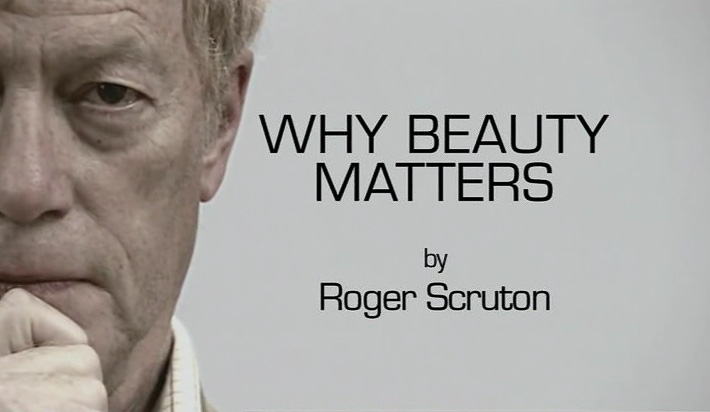
BBC TV program: Why Beauty Matters
1974. Art and Imagination: A Study in the Philosophy of Mind (London:
Methuen, 1974; Routledge, Kegan & Paul, 1982; St. Augustine’s Press,
1998 and 2015). Abbreviation = AI.
1979. The Aesthetics of Architecture (Princeton, New Jersey: Princeton
University Press, 1979; second printing with corrections, 1980; with a new introduction
[pp. ix–xxi], 2013). Abbreviation = AA.
1980. The Meaning of Conservatism (Macmillan/Penguin, 1980; 2nd ed.,
1984; 3rd ed. Houndmills, Basingstoke, Hampshire: Palgrave Macmillan, 2000;
St. Augustine’s Press, 2002). Abbreviation = MC.
1981. The Politics of Culture and Other Essays (Manchester: Carcanet
Press). Abbreviation = PC.
1981a. A Short History of Modern Philosophy: From Descartes to Wittgenstein
(London & New York: Routledge, 1981 and 1984; 2nd ed. revised and enlarged,
1995; 3rd ed. 2001). Abbreviation = HMP.
1981b. Fortnight’s Anger (Manchester: Carcanet Press, 1981).
Abbreviation = FA.
1982. Kant (Oxford: Oxford University Press, 1982; revised ed. with
a new chapter on “Enlightenment and Law” published as Kant:
A Very Short Introduction, 2001; illustrated ed. London & New York:
Sterling, 2010). Abbreviation = KI.
1982a. [The Palgrave Macmillan] Dictionary of Political Thought (Houndmills,
Basingstoke, Hampshire: Palgrave Macmillan, 1982; 2nd ed. 1996; 3rd ed. 2007).
Abbreviation = PMD.
1983. The Aesthetic Understanding: Essays in the Philosophy of Art and Culture
(London & New York: Methuen, 1983; new ed. with three new essays added
[Chapters 14–16, pp. 217–286] = South Bend, Indiana: St. Augustine’s
Press, 1998). Abbreviation = AU.
1985. Thinkers of the New Left (Harlow: Longman; London: The Claridge
Press). Abbreviation = TNL.
1986. Sexual Desire: A Moral Philosophy of the Erotic (New York: The
Free Press, 1986); new subtitle: A Philosophical Investigation (London:
Continuum, 2006). Abbreviation = SD.
1986a. Spinoza (Oxford: Oxford University Press, 1986 and 1996; published
as Spinoza: A Very Short Introduction, 2002). Abbreviation = SI.
1987. A Land Held Hostage: Lebanon and the West (London: The Claridge
Press). Abbreviation = LHH.
1987a. Untimely Tracts (Houndmills, Basingstoke, Hampshire: Palgrave
Macmillan). Abbreviation = UT.
1990. Philosopher on Dover Beach: Essays (Manchester: Carcanet Press,
1990; South Bend, Indiana: St. Augustine’s Press, 1998). Abbreviation
= PDB.
1991. Francesca: A Novel (London: Sinclair-Stevenson). Abbreviation
= FN.
1991a. A Dove Descending: And Other Stories (London: Sinclair-Stevenson).
Now available online at: <http://www.clarionreview.org/2012/11/a-dove-descending-part-i/>.
Abbreviation = DD.
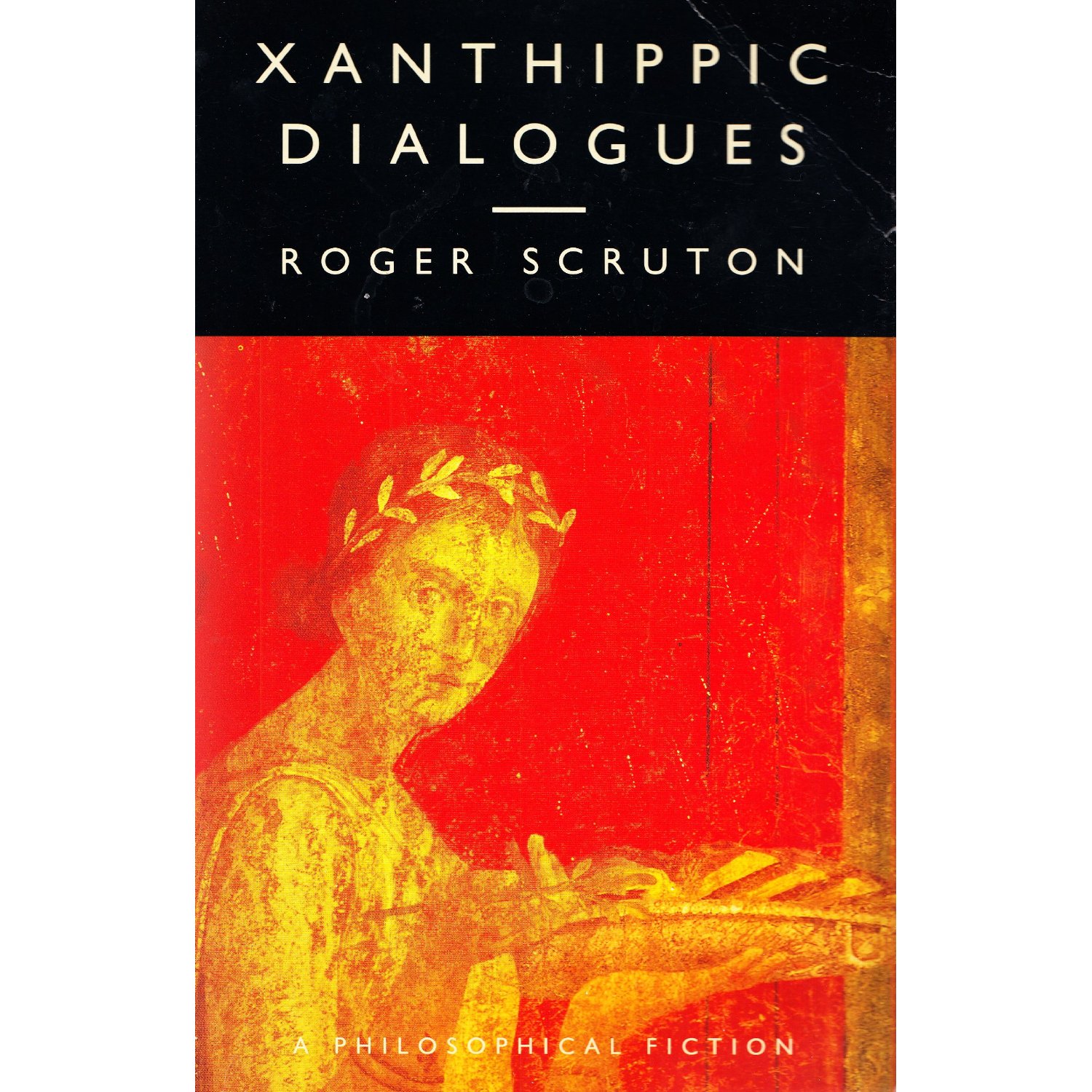
1993. Xanthippic Dialogues (London: Sinclair-Stevenson, 1993; paperback,
1994; South Bend, Indiana: St. Augustine’s Press, 1998). Abbreviation
= XD.
1994. Modern Philosophy: An Introduction and Survey (London: Sinclair-Stevenson,
1994; Penguin, 1996; Random House UK, 2001; Pimlico, 2004). Abbreviation = MP.
1994a. The Classical Vernacular: Architectural Principles in an Age of Nihilism
(Manchester: Carcanet Press; New York: St. Martin’s). Abbreviation = CV.
1996. An Intelligent Person’s Guide to Philosophy (Duckworth,
1996; Penguin, 1999; published as Philosophy: Principles and Problems,
Continuum, 2005 and 2016). Abbreviation = PP.
1996a. Animal Rights and Wrongs (London: Demos, 1996; 2nd ed. 1998;
3rd ed. Metro, 2000). Abbreviation = AR.
1997. The Aesthetics of Music (Oxford: Oxford University Press, 1997;
paperback, 1999). Abbreviation = AM.
1997a. Society of Strangers: Education for Citizenship in the Post-Modern
World (University of London: Institute of United States Studies).
1998. On Hunting (London: Yellow Jersey Press). Abbreviation = OH.
1998a. An Intelligent Person’s Guide to Modern Culture (Duckworth,
1998; new ed. = South Bend, Indiana: St. Augustine’s Press, 2000; London:
Continuum, 2005). Abbreviation = MC.
2000. Perictione in Colophon: Reflections on the Aesthetic Way of Life (South
Bend, Indiana: St. Augustine’s Press). Abbreviation = PIC.
2000a. England: An Elegy (Chatto & Windus, 2000; Pimlico, 2001;
London: Continuum, 2001 and 2006). Abbreviation = EE.
2000b. Who, What and Why: Trans-National Government, Legitimacy and the
World Health Organisation (Institute of Economic Affairs, 2000).
2002. The West and the Rest: Globalization and the Terrorist Threat
(ISI, 2002; London: Continuum, 2003 and 2005). Abbreviation = WR.
2004. Death-Devoted Heart: Sex and the Sacred in Wagner’s Tristan
and Isolde (Oxford: Oxford University Press). Abbreviation = DDH.
2004a. News from Somewhere: On Settling (London: Continuum). Abbreviation
= NS.
2004b. The Need for Nations (Civitas). Second edition: England
and the Need for Nations (2006). Abbreviation = NN.
2005. Gentle Regrets: Thoughts form a Life (London: Continuum). Abbreviation
= GR.
2006. A Political Philosophy: Arguments for Conservatism (London: Continuum).
Abbreviation = APP.
2007. Culture Counts: Faith and Feeling in a World Besieged (New York:
Encounter Books). Abbreviation = CC.
2009. I Drink Therefore I am (London: Continuum). Abbreviation = ID.
2009a. Understanding Music: Philosophy and Interpretation (London:
Continuum). Paperback edition: 2016. Abbreviation = UM.
2009b. Beauty (Oxford: Oxford University Press, 2009; published as
Beauty: A Very Short Introduction, 2011).
2010. The Uses of Pessimism: and the Danger of False Hope (Atlantic
Books, 2010; Oxford: Oxford University Press, 2013). Abbreviation = UP.
2011. Green Philosophy (Atlantic Books). Also published as Scruton
2012b. Abbreviation = GP.
2012. The Face of God (London: Continuum). Gifford
Lectures, University of St. Andrews, Spring 2010. Abbreviation = FG.
2012a. Our Church: A Personal History of the Church of England (Atlantic
Books). Abbreviation = OC.
2012b. How to Think Seriously About the Planet: The Case for an Environmental
Conservatism (Oxford: Oxford University Press). Abbreviation = GP.
2013. “Introduction to the 2013 Edition”, The Aesthetics of
Architecture (Princeton, New Jersey: Princeton University Press), ix–xxi.
Cf. Scruton 1979.
2014. Notes from Underground (Beaufort Books). Abbreviation = NG.
2014a. The Soul of the World (Princeton and Oxford: Princeton University
Press). Stanton Lectures,
University of Cambridge, Michaelmas Term 2011. Abbreviation = SW.
2014b. How to Be a Conservative (Bloomsbury Continuum). Abbreviation
= HBC.
2015. The Disappeared (Bloomsbury). Abbreviation = TD.
2015a. Fools, Frauds, and Firebrands: Thinkers of the New Left (Bloomsbury). Abbreviation = FFF.
2016. Confessions of a Heretic (Notting Hill). Abbreviation = COH.
2016a. Conversations with Roger Scruton: Roger Scruton and Mark Dooley (Continuum). Abbreviation = CRS.
2016b. The Ring of Truth: The Wisdom of Wagner's Ring of the Nibelung (The Overlook Press). Abbreviation = ROT.
2017. On Human Nature (Princeton University Press). Abbreviation = OHN.
2017a. Conservatism: Ideas in Profile (Profile Books). Abbreviation = CIP.
2018. Where We Are: The State of Britain Now (Bloomsbury Continuum). Abbreviation = WWA.
2018a. Conservatism: An Invitation to the Great Tradition (St. Martin's Press). Abbreviation = CGT.
2018b. Music as an Art (Bloomsbury Continuum). Abbreviation = MAA.
2018c. Souls in the Twilight (Beaufort Books). Abbreviation = SIT.
2020. Wagner's Parsifal: The Music of Redemption (Penguin). Abbreviation = WP.
2022. Against the Tide: The best of Roger Scruton's columns, commentaries and criticism (Bloomsbury). Abbreviation = ATT.
1988. Conservative Thinkers: Essays from ‘The Salisbury Review’
(London: The Claridge Press).
1988a. Conservative Thoughts: Essays from ‘The Salisbury Review’
(London: The Claridge Press).
1991b. Conservative Texts: An Anthology, Edited with an Introduction
[pp. 1–28] by Roger Scruton (New York: St. Martin’s Press).
Writings in Forbes: "Culture Matters"
Writings in The Spectator
Writings in The American Spectator
Writings in The American
Writings in The New Criterion
Writings in The New Atlantis
Writings in Aeon Magazine
Writings in The Imaginative Conservative
2007a. “The Sacred and the Human”, Prospect Magazine (August 1, 2007): <http://www.prospectmagazine.co.uk/magazine/roger-scruton-on-religion/>.
2008. “The Limits of Liberty”, The American Spectator (Dec 2008 / Jan 2009): 46–54. <http://www.hacer.org/pdf/AS11.pdf>.
2012c. “The Space of Music”, Reason Papers Vol. 34, no. 2 (October 2012): 167–183. <http://www.reasonpapers.com/pdf/342/rp_342_14.pdf>.
2015b. “The End of the University”, First Things (April 2015), <https://www.firstthings.com/article/2015/04/the-end-of-the-university>.
2016c. “Richard Wagner and the Valhalla state of mind”, Prospect Magazine (July 2016 issue), <http://www.prospectmagazine.co.uk/features/a-valhalla-state-of-mind>.
2017b. “The Work of the Philosopher”, TLS (Nov 1, 2017), <https://www.the-tls.co.uk/articles/public/roger-scruton-timothy-williamson-philosophy/>.
Postcards from the Frontline: Sir Roger Scruton as a Journalist
Every Tear has been Wiped Away: The True Meaning of the Cross
Thoughts from a Life: A Man of Letters
This bibliography of books and articles by Roger Scruton is maintained by Christopher S. Morrissey